Follow a yearly lawn maintenance schedule to keep your home lawn healthy with seasonal care tips, watering, mowing, and fertilizing guidance.
A green, lush, and healthy lawn is not achieved by just a few days of effort; rather, it is the result of consistent and proper care throughout the whole year. Many people pay attention to their lawn for a short period after planting, but then due to lack of proper maintenance, the lawn loses its beauty. The solution to this problem is a yearly lawn maintenance schedule, through which you can monitor every season to know what the lawn needs and when to do it.
This article is especially for those who want to create a simple, practical, and realistic annual lawn care routine without any unnecessary complexity.
Why is a yearly lawn maintenance schedule important?

A lawn is a living system that is affected by weather, water, soil, and care methods. If you maintain the lawn in the same way throughout the year, the results will not be good. Annual planning helps you understand which season to let the lawn rest and which season to give it more attention.
A proper yearly lawn maintenance schedule protects the lawn from weakening and increases its lifespan.
Yearly Lawn Maintenance Schedule for a Healthy Lawn
Spring season: A fresh start for the lawn
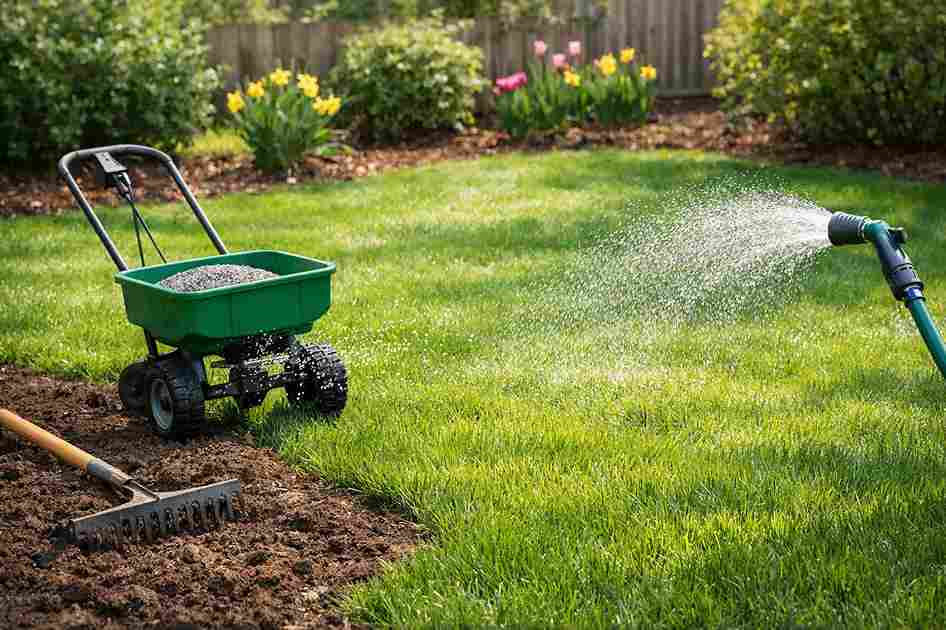
Spring is considered the most important season for the lawn. After winter, the grass becomes weak and dull, which is why in spring, focus is given to reviving the lawn.
First, thoroughly clean the lawn. Remove dead leaves, twigs, and old debris so that the grass can get air and sunlight. After that, do light mowing so that the new shoots get a chance to grow. In spring, loosening the soil and adding light organic fertilizer strengthens the foundation of the lawn.
Start watering gradually; giving too much water at once can do more harm than good. Proper use in spring forms the foundation for the success of the yearly lawn maintenance schedule. If you are completely new, understanding lawn care tips for beginners will be very beneficial for you.
Summer Season: Time to Protect the Lawn
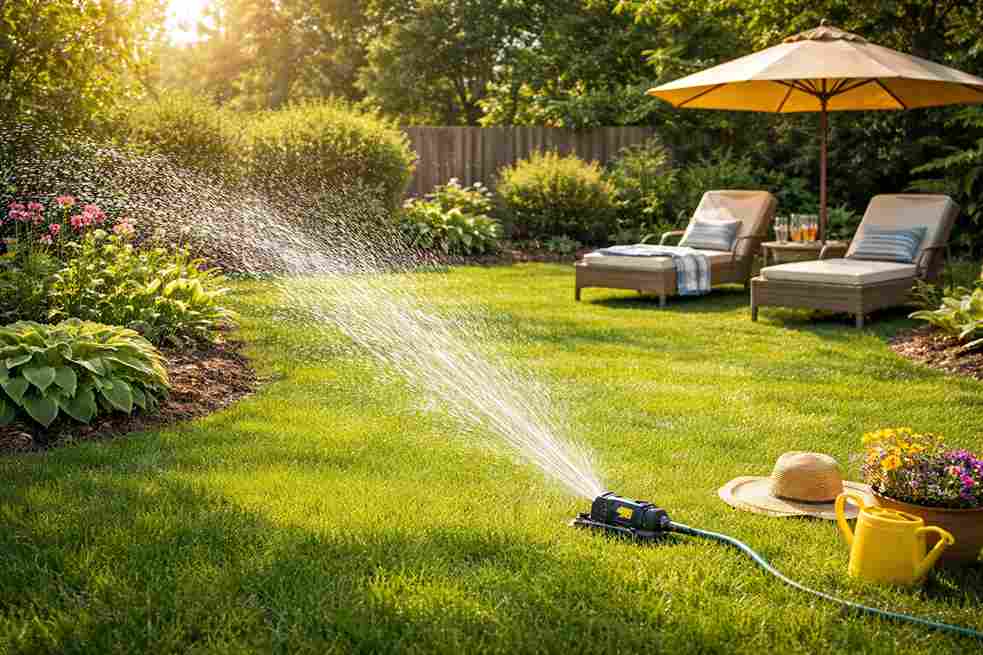
Lawns face the most stress during the summer. Intense sunlight, high temperatures, and lack of water can dry out the grass. Therefore, caution is most important in this season.
Water should always be given in the early morning or in the evening so that it doesn’t evaporate quickly. Avoid cutting the grass too short because long grass helps retain the moisture in the soil. If possible, avoid unnecessary walking on the lawn.
Fertilizer use should be very limited in summer. Excess fertilizer can burn the grass. A balanced yearly lawn maintenance schedule helps keep the lawn alive during summer.
Autumn season: A phase to strengthen the lawn
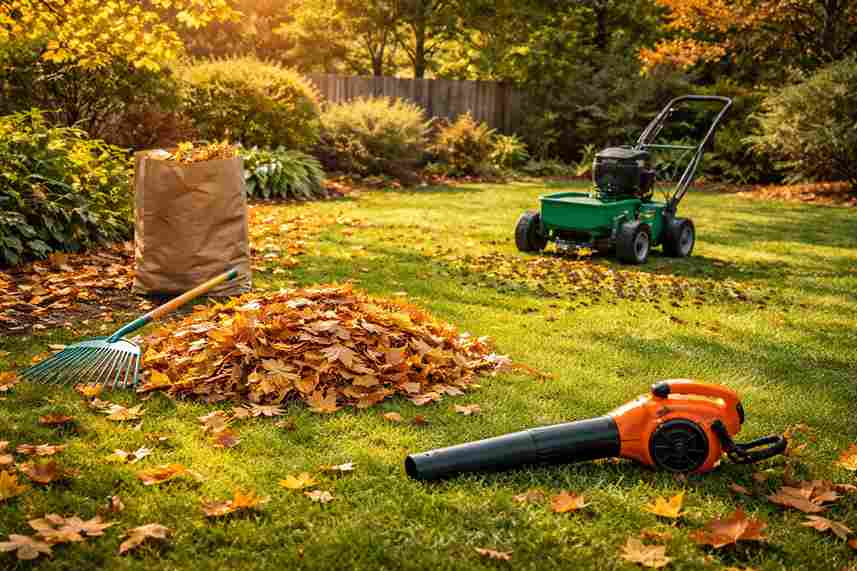
Autumn is considered the best season for lawn maintenance and preparation. During this time, grass responds relatively better to treatment and the soil absorbs nutrients well.
Regularly clean up fallen leaves because they can smother the grass. Controlling weeds is relatively easier in this season, so do not ignore them. Light fertilization and proper watering prepare the lawn for the winter.
The effort put in during autumn is a part of the yearly lawn maintenance schedule, which directly affects the results in the following year, and that’s why the best selection is lawn maintenance in autumn.
Winter season: Time to give your lawn some rest
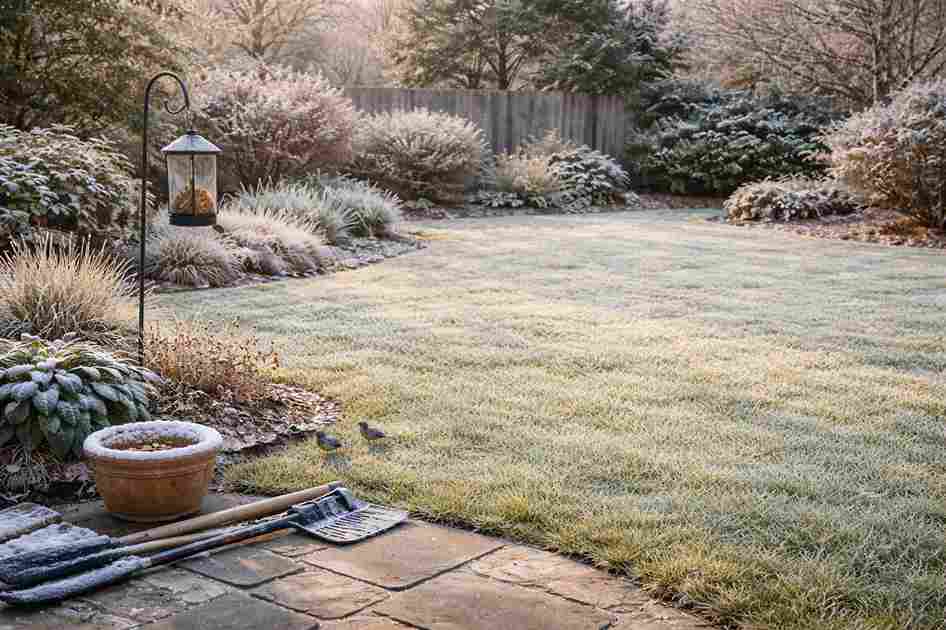
In winter, the growth of the lawn almost stops, so minimal intervention is better during this season. Unnecessary mowing or excessive watering can damage the lawn.
If there is snow or severe cold, avoid walking on the lawn. Reduce the amount of watering significantly and only use water as necessary. The goal in winter is to keep the lawn safe, not to make changes to it. A smart yearly lawn maintenance schedule considers winter a time of rest.
Proper system for watering throughout the year
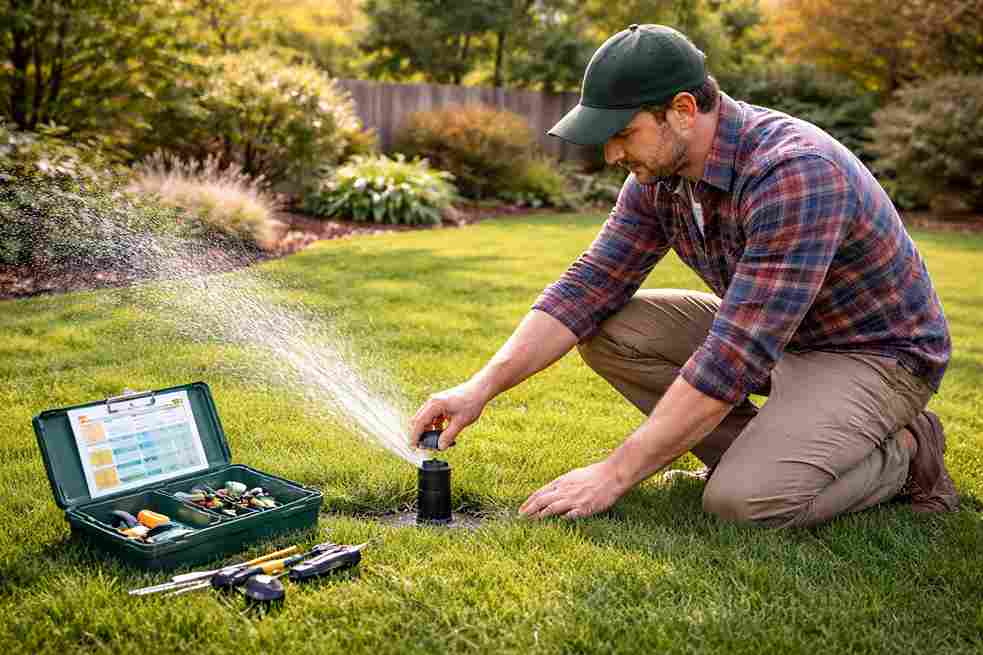
No single principle for watering is correct for the entire year. During spring and autumn, moderate watering is sufficient; in summer, more water is needed, and in winter, less water is required. Always prioritize watering deeply so that the roots become strong.
Watering at the wrong time or giving too much water can cause diseases in the lawn, so make watering an essential part of your annual schedule.
Annual method of grass cutting
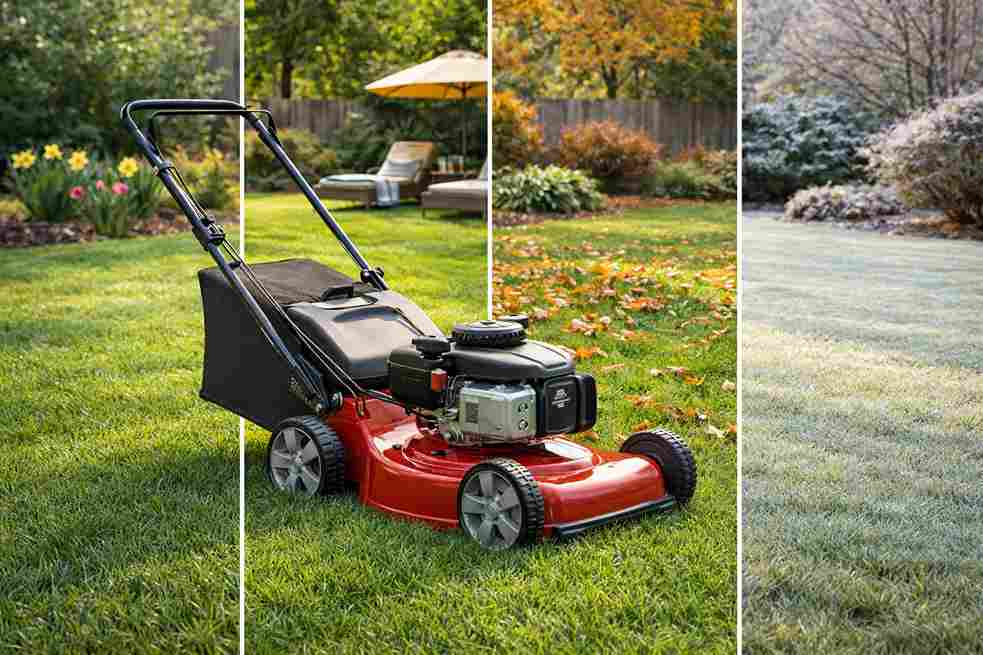
The mowing of the lawn should also be done according to the season. In spring and summer, regular but moderate mowing; in autumn, light mowing; and in winter, taking almost a break is better. Cutting too much grass at once weakens the lawn.
Avoid common annual mistakes
Most people follow the same approach throughout the year, which is the biggest mistake. Adding fertilizer unnecessarily, watering at the wrong time, and not being patient harm the lawn. An organized yearly lawn maintenance schedule helps avoid all these mistakes.
Conclusion:
A beautiful lawn is not the result of a coincidence, but it is achieved through proper planning, patience, and consistent care throughout the year. If you take care of your lawn by understanding the demands of each season, your lawn will not only remain healthy but will also become more beautiful over time. A clear and actionable yearly lawn maintenance schedule teaches you exactly this discipline.
If now you also want a yearly lawn maintenance schedule PDF along with the article, I can provide you a link to a good site that will make things easier for you.
FAQs
What is Grass 101?
Grass 101 basically refers to the basic understanding of grass. It includes knowing the different types of grass, what kind of soil, water, and sunlight they need, and how to care for them through different seasons of the year.
For beginners, Grass 101 means first understanding the nature of grass and then starting to take care of any type, because effort made without understanding often harms the lawn instead of benefiting it.
How do I maintain my lawn?
Consistency is the most important thing for maintaining a lawn. First of all, water the grass according to the season, not too much and not too little. After that, mow the grass at the appropriate time and use fertilizer wisely.
It is also necessary to aerate the soil at least once a year to keep the roots strong. If you carry out all these tasks according to an annual schedule, the lawn will naturally remain healthy.
What is the 1 3 rule for grass?
The 1/3 rule is a simple yet very effective principle for lawn mowing. According to it, the grass should not be cut more than one-third of its total length at a time. Excessive cutting of the grass stresses it and weakens its roots. This rule is especially useful for beginners because it helps the lawn gradually become stronger and denser.
What is a good lawn care schedule?
We create a good lawn care schedule by considering the weather conditions throughout the year. Cleaning and new beginnings in the spring, watering and protection in the summer, strengthening in the autumn, and providing rest in the winter form the foundation of a balanced schedule. When you divide lawn care into seasonal stages, the work becomes easier, and the results also improve.
How many times a year should you treat your lawn?
The treatment of a lawn is done in several stages throughout the year, but this depends on the condition of the lawn and the type of grass. Generally, in spring and autumn, basic mowing and fertilizing are sufficient, whereas in summer, only protection and watering are prioritized. Instead of over-treating, it is better to regularly monitor the lawn and take action only when it is truly necessary.